My year of allotmenting
Life in General 30th November 2025
In January, I heard that a local allotment had some plots free. I’ve always liked gardening, particularly fruit and veg – you can eat the literal fruits of your labour!
So I rented out a half-plot, about 3×5 metres. Which is quite large for a half-plot!
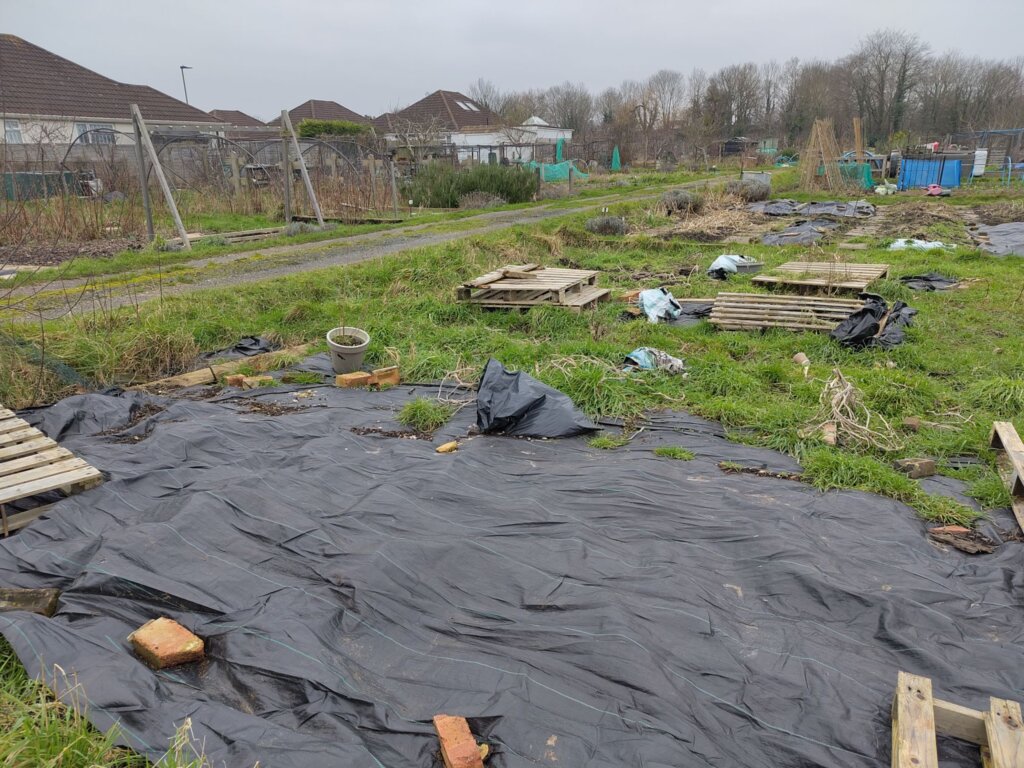
The week after I completed the paperwork, I went up to inspect my new plot. This was what I found:
Clearing up
The first thing I did, with some help, was to clear the plot by turning over the soil and digging out the grass that had taken over the majority of the plot.
Whilst doing this we found some strange objects, including half a shear blade and a rusty trowel.
This took a couple of weeks, and it wasn’t easy either – especially in the middle of winter on a very exposed site. Usually I was the only one on site, and with good reason.
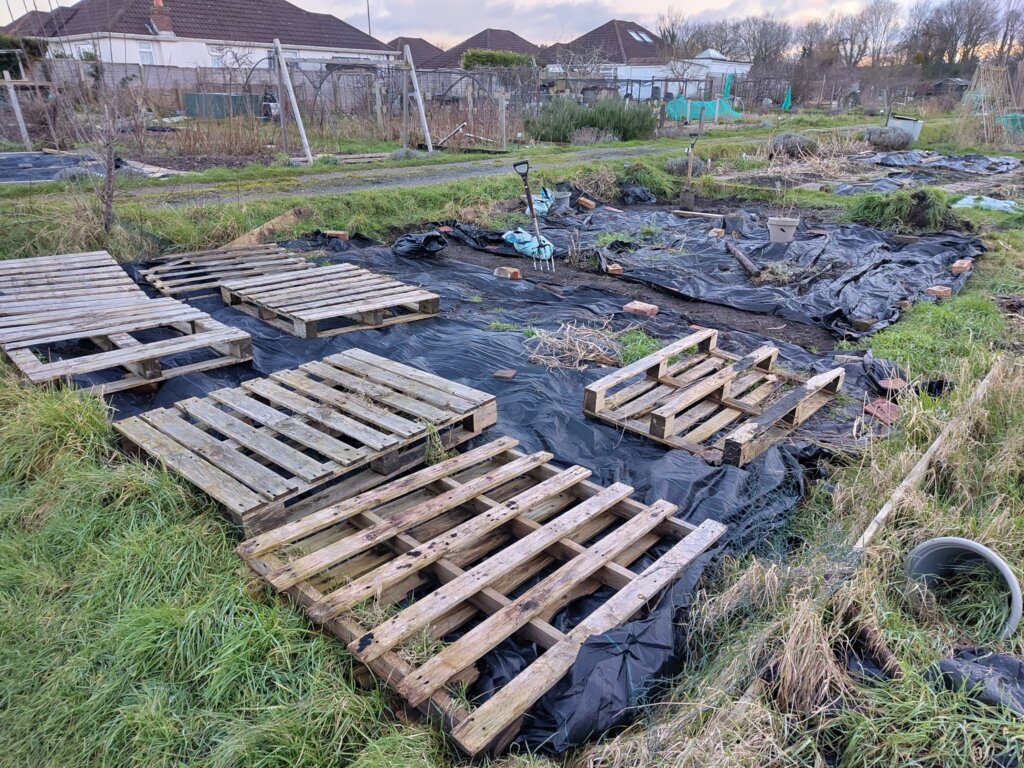
Once we had done this, we covered over as much of the plot as possible using some plastic that was already on the plot, although a bit scrunched over.
Someone suggested to me that it would be easier to cover the plot up again if I folded the plastic over to make a path in the middle.
A cunning plot
Once everything had been cleared and covered, there wasn’t much I could do on the plot itself for the next couple of months.
So I started doing some research and planning what I wanted to grow and where. During clearing I found some runner bean skins at the top of the plot, so I knew I didn’t want to grow any runner beans near there.
Sowing the seeds
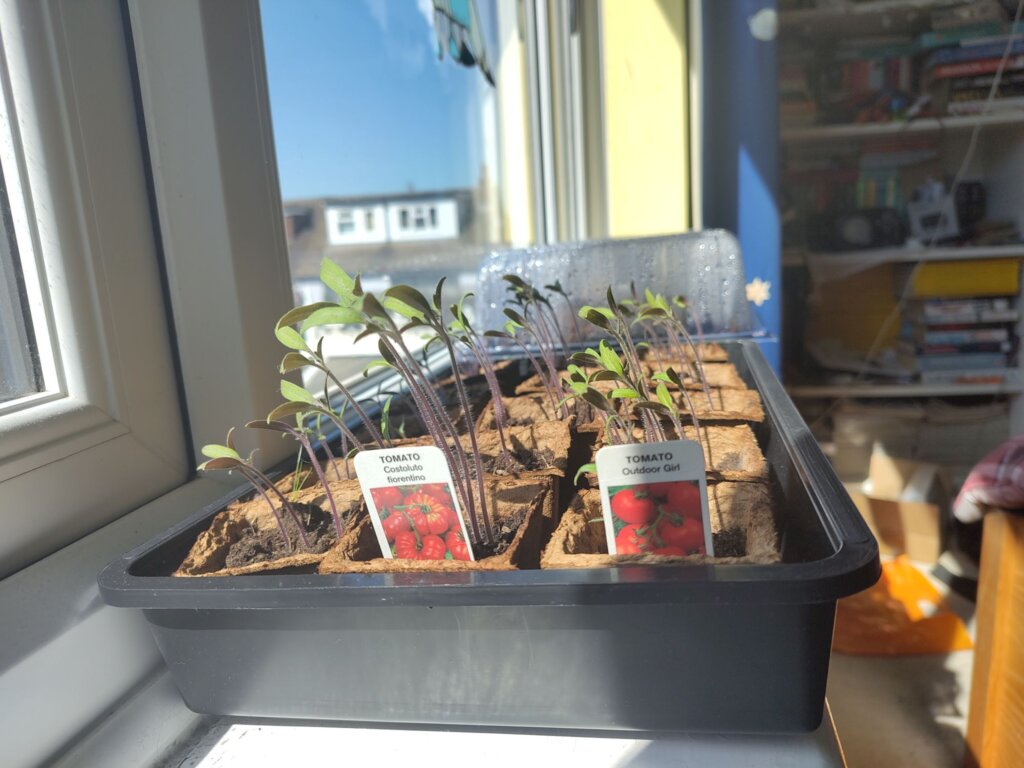
In around mid-March, I started planting seeds in biodegradable paper pots indoors. I planted tomatoes, courgettes and runner beans.
I used some plastic trays to create a mini-greenhouse so they stayed warm.
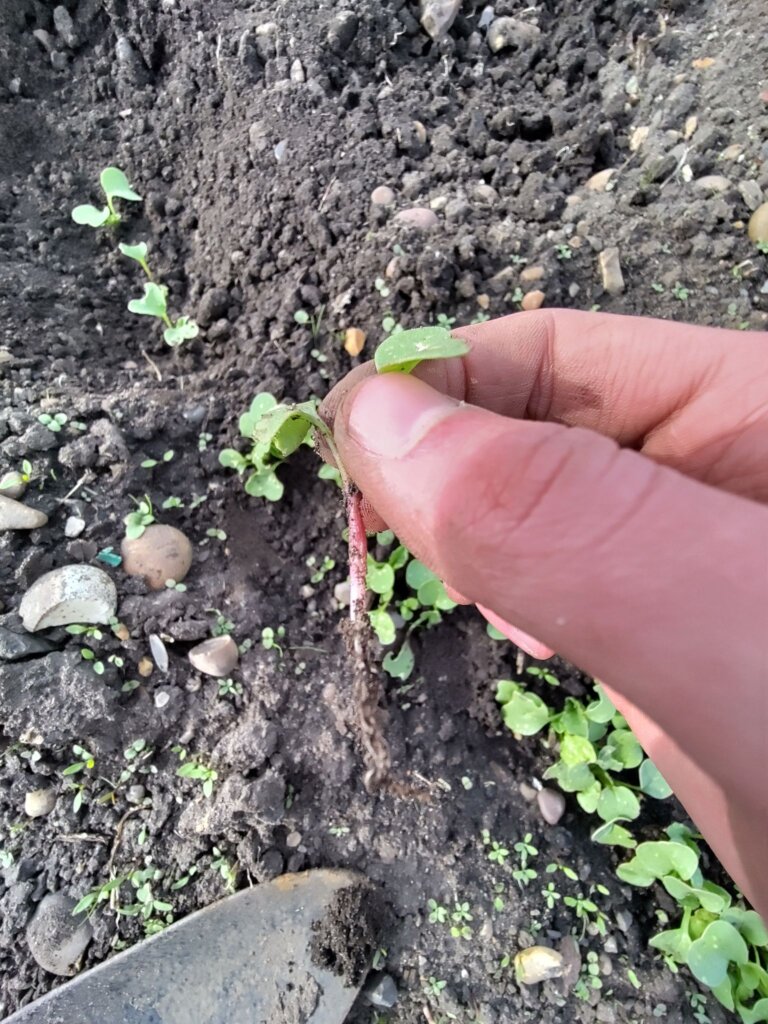
As well as sowing seeds indoors, I also gradually started sowing carrots, radishes, spring onions, as well as planting onion sets, directly onto the plot.
The indoor seeds were quick to germinate, taking around 2 weeks. The exception to the rule was the courgettes, which took around 4-5 weeks before showing shoots.
Meanwhile back on the plot, the radish seeds were coming up nicely too. The carrots and onion sets were taking a bit longer to start showing shoots.
Potatoes that had been planted by the previous plot owner were also growing.
But as the weather started warming up, and everything came to life, so did the weeds.
Weeds, weeds everywhere
Apart from a path down the middle, I decided to keep the site exposed. Keeping on top of them was a full-time job in itself (as well as the one I already have!) So in the remaining photos you’ll probably see lots of weeds for this reason. There was bineweed and (can’t remember), but mostly wildflowers.
The solution that I found was to use the plentiful wood chipping supplies nearby to cover over the bare soil.
Planting out tomatoes and beans
I read that you could plant out tomatoes and beans as early as May, which I wanted to do because they were really starting to grow out of their biodegradable pots – you could see the roots poking out of them!
However, because the plot was on an exposed site, many people waited until the start of June before planting out. So that’s what I did.
I got some bamboo poles that we had cut down from our own garden and used those as supports for the tomatoes and beans.
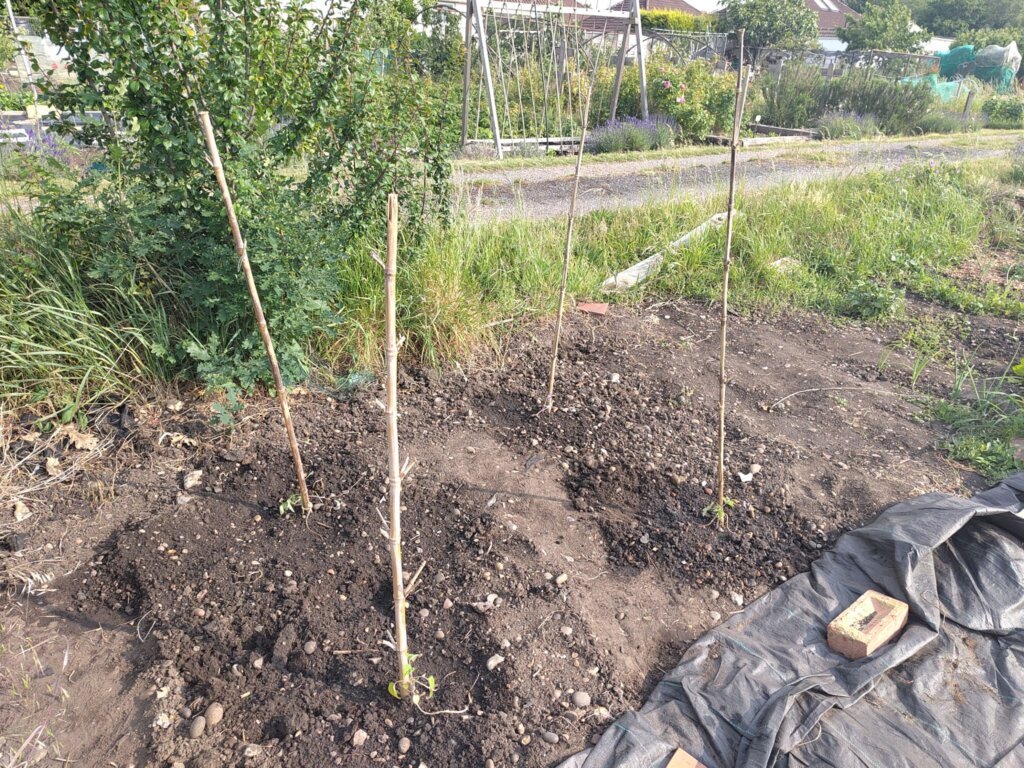
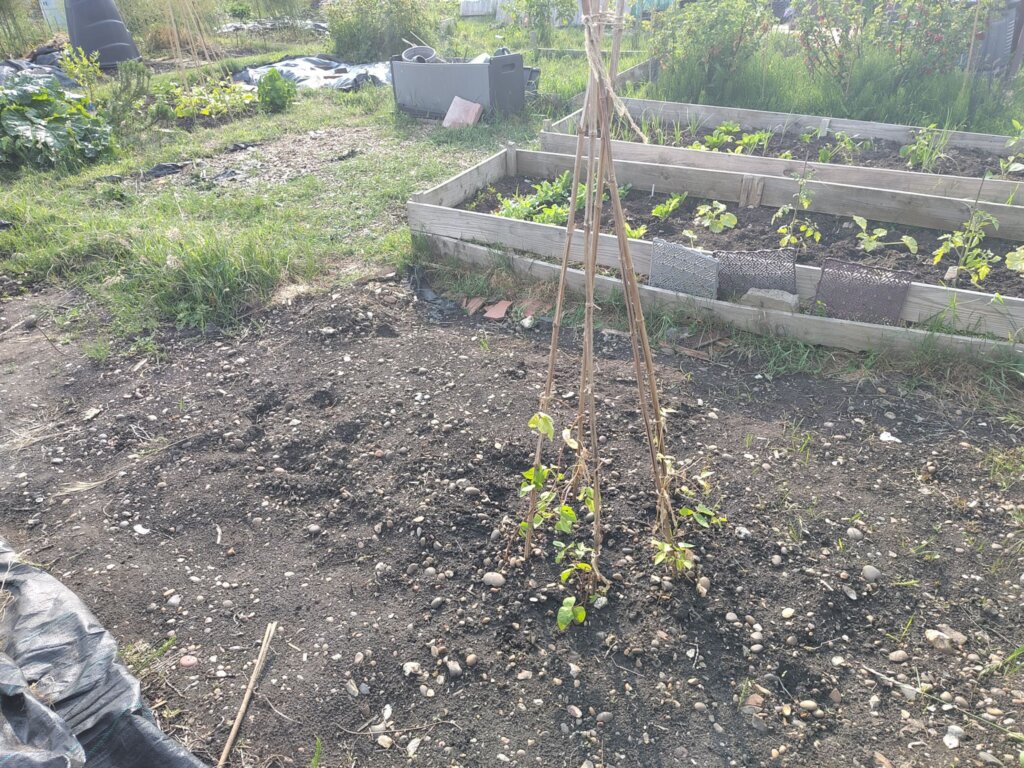
I also planted out the courgettes a couple of weeks later, and they started to thrive.
One thing I have learned is plant things out as soon as you can (and by that I mean as soon as the risk of frost has gone). When this is depends on where and how exposed your plot is. Once you do, you’ll be surprised at how quickly everything starts to grow.
It’s all coming together
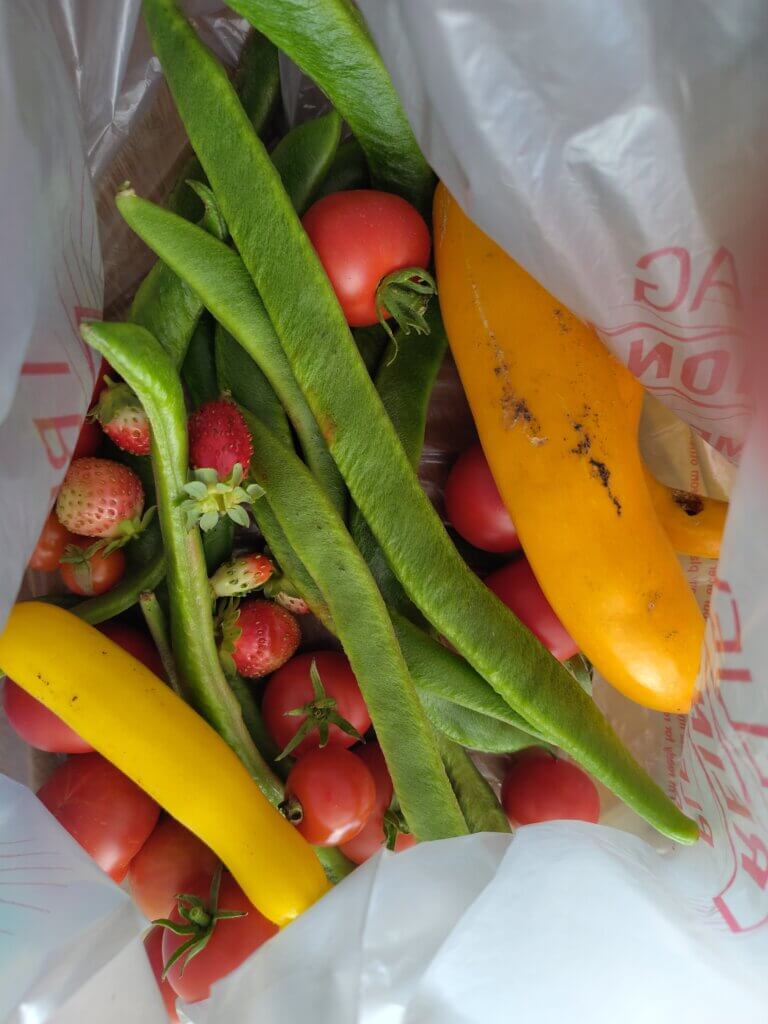
In July, August and September, the fruit and vegetables were growing and ripening, ready for harvest. It was a challenge keeping on top of it all. The plants that yielded the most were the runner beans and tomatoes, where they were ripening faster than we could pick and eat them!
What I’ve learned
For those either looking to get an allotment plot or already have one, here’s a list of the tips I’ve learned along the way:
- Keep on top of picking produce when it’s ready.
- Plant everything out as soon as you can (depending on the weather).
- If you have a large area of uncovered soil that you won’t be planting in, cover it over with wood chippings or a plastic sheet. It’ll save you a lot of weeding in the long run!
- Before you sow any seeds, have a plan of what you want to plant and where.
- Give runner beans lots of support. If you don’t, they can topple under their own weight!
- Grow fruit and vegetables that you, your family or friends like.